Designing for everyone
Why accessibility should be a design principle, not a box to tick
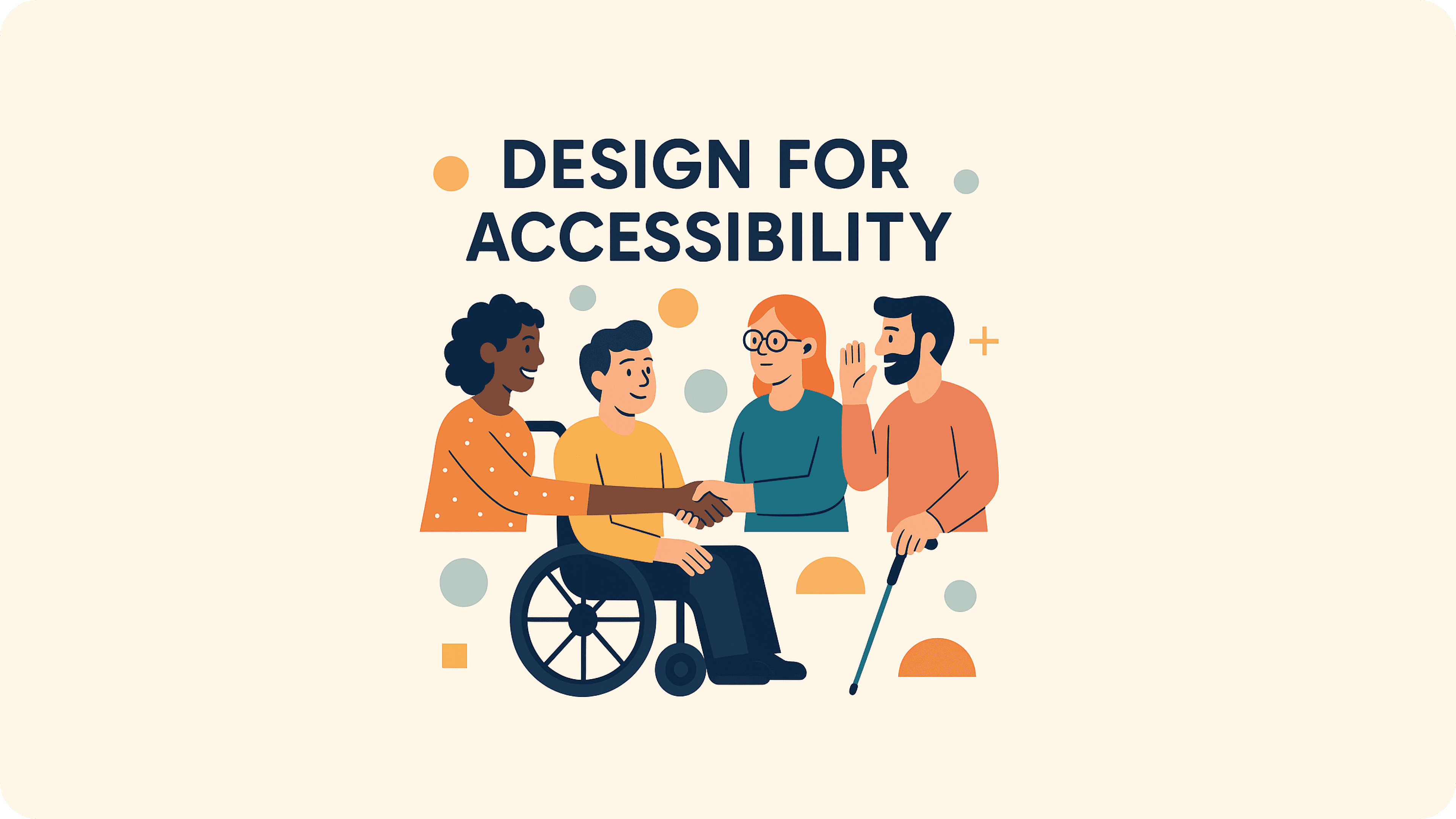
Designing for everyone: why accessibility should be a design principle, not a box to tick
Reflections on Andrea Boundy Head of Visual and UI design, Telstra’s accessibility journey and what it means for the rest of us.
Growing up half-Irish and half-Chilean, I spent my early years shifting between worlds — from Sydney to Kildare, from being the “Aussie kid” to the one who didn’t quite fit in. I learned early what it feels like to be on the edge of belonging. Maybe that’s why accessibility has always been more than a design checkbox for me. It’s a philosophy, one grounded in empathy, inclusion, and the quiet belief that good design should never leave anyone behind.
That perspective resurfaced recently when I attended Accessibility as a Design Principle: Lessons from Telstra’s Digital Design Team. It was a masterclass in how accessibility can evolve from compliance into culture, from a constraint into a catalyst for better design.
Scaling accessibility starts with systems
One of the strongest lessons from Telstra’s journey is that accessibility isn’t something you layer on at the end, it’s something you bake in from the start. Telstra’s Able design system is a great example of how structure enables scale.
Rather than a rigid library, Able acts as a flexible ecosystem, one that ensures AA-level compliance while empowering designers to meet diverse business needs across consumer, business, and enterprise contexts. Its “hub-and-spoke” model allows for localised design systems that extend core accessibility principles without fragmenting them.
That balance between consistency and adaptability is what makes accessibility sustainable. It’s how you scale inclusion without sacrificing creativity.
People first, processes second
Telstra’s accessibility practice thrives because of its people. Hiring for curiosity and empathy, not just technical expertise — ensures designers understand the human stories behind accessibility standards.
They also invest in building shared understanding through their Accessibility Guild, empathy-building experiences, and A11y “Open Bars” — safe spaces where designers and developers bring work-in-progress for open critique and learning.
This culture of feedback and vulnerability stood out to me. Accessibility isn’t about perfection; it’s about progress. When feedback is normalised, learning compounds, and inclusion becomes a living, breathing practice, not a policy.
Inclusion through micro-moments
What struck me most was how small choices can have an outsized impact.
A button alternative for a “Shake & Reward” feature so users with limited mobility can still play.
Auto-detect logic in campaign videos that adds pause/play controls if the animation exceeds five seconds.
Rebuilt enterprise data tables that finally allow screen-reader users to do their jobs with dignity.
These examples remind us that accessibility is human-centred design in its purest form. Every micro-decision can either include or exclude someone, and our role as designers is to choose inclusion every time.
The mindset that makes it stick
Accessibility isn’t just a compliance effort — it’s a cultural one.
Telstra’s success shows how embedding a growth mindset transforms accessibility from an obligation into an opportunity. By creating open spaces for critique, connecting with specialists, and partnering with external auditors, they’ve built a feedback loop that sustains itself.
This mirrors something I’ve always believed: design systems and frameworks are only as inclusive as the mindset behind them. Accessibility starts with people who are willing to listen, learn, and adapt — and it grows when those values are rewarded.
Why it resonates personally
For me, accessibility is as much personal as it is professional.
I’ve spent my life somewhere between cultures, communities, and perspectives — rarely fully “fitting in,” yet always observing how small design choices can make people feel seen or invisible. That’s why I’m drawn to building experiences that are inclusive, trauma-informed, and respectful of difference.
Design has the power to make people feel like they belong, or remind them that they don’t. My mission is to design for belonging.
Final reflection
The biggest lesson from Telstra’s approach is simple but profound: accessibility scales when it’s shared. When it’s no longer the responsibility of a specialist team, but an embedded expectation across product, design, and engineering.
The future of inclusive design lies in the intersection of systems, empathy, and accountability. And if Telstra’s example shows anything, it’s that when accessibility becomes part of the culture, everyone truly thrives.
Key takeaways
Embed accessibility early: Start at discovery, not delivery.
Scale through systems: Use frameworks like Telstra’s Able to align flexibility with compliance.
Invest in people: Curiosity and empathy build stronger, more inclusive teams.
Create feedback rituals: Accessibility grows where critique is safe and shared.
Design for belonging: Every interaction is a chance to include or exclude — choose inclusion.

Alex Pacheco
Lead Product designer
If you like what you see or have any questions, feel free to send me an email anytime.
Share this article
Recent articels
I write about the future of design and the life of a product designer