Two questions that changed how brokers pitch
SaaS
B2B
Real Estate
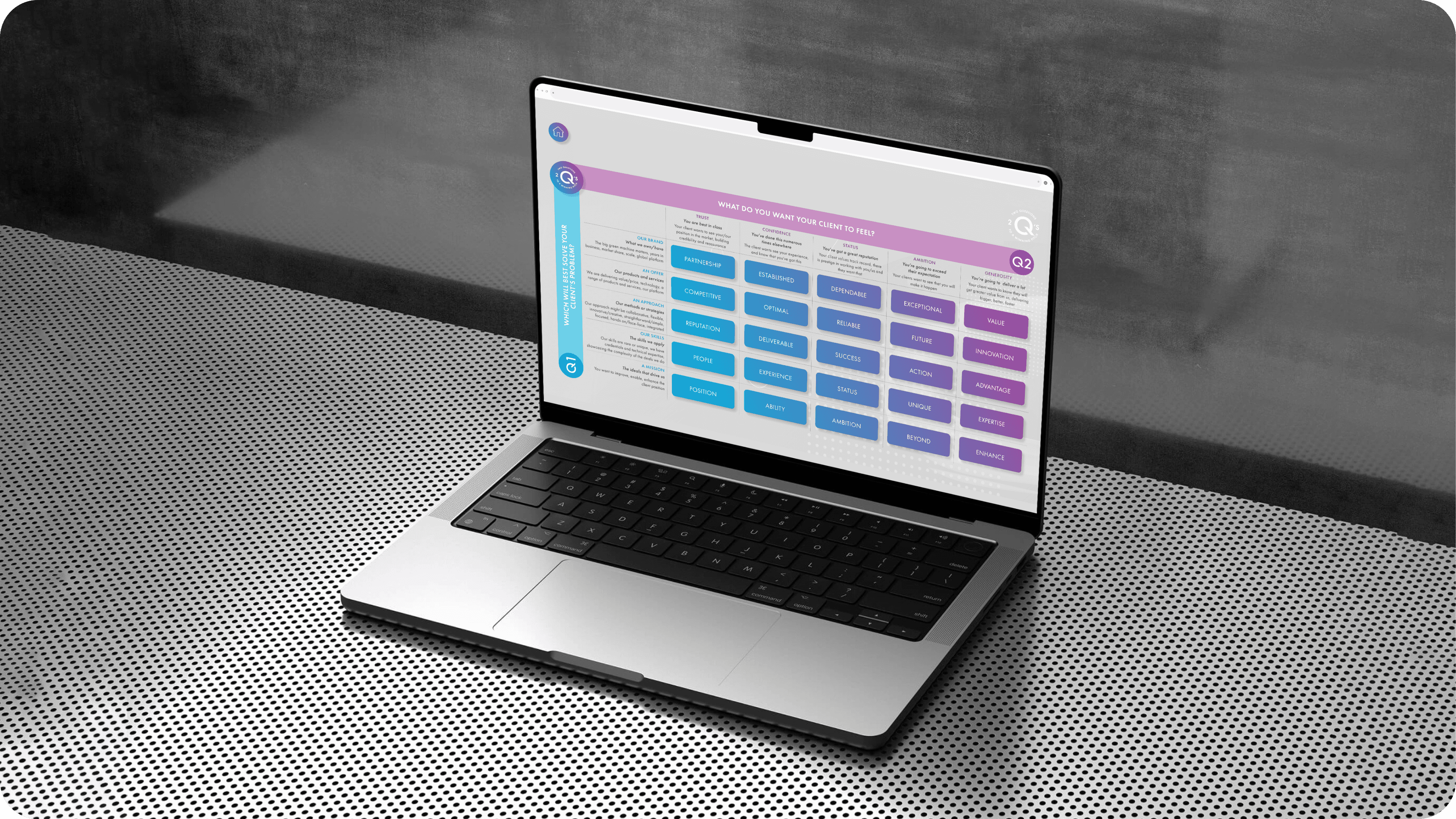
Overview
With over 1,800 employees and more than 25 business lines across APAC, CBRE’s teams each had their own way of defining success. There was no consistent method for understanding a client’s problem or crafting a tailored response.
The existing process leaned on fragmented tools, customer reports, and hefty PowerPoint decks. Turnaround was slow, proposals were copy-pasted from client to client, and teams walked into pitches feeling on the back foot.
I designed a digital tool to unify that process — helping brokers frame client challenges faster through two simple diagnostic questions. It replaced the patchwork of tools and heavy decks with a single, intuitive workspace and a repeatable framework used across the business.
Services
UX/UI design, UX copywriting, design leadership
Client name
CBRE website
Results at a glance
+12.5% revenue uplift (A$48M) in pilot markets
66% improvement in client retention in pilot markets
Standardised approach to framing opportunities across 25 business lines and 1,800 staff
Cut proposal prep time from days to hours, freeing teams to focus on insight, not admin
The Challenge
Every line of business qualified and pitched opportunities its own way. Preparing a proposal meant days of manual, fragmented, PowerPoint-heavy work — and the output was often a recycled response that didn’t fit the client in front of you. My brief from the Growth Platform team: design a scalable way to bring consistency, speed, and strategic clarity to how opportunities were qualified and pitched.
The Solution
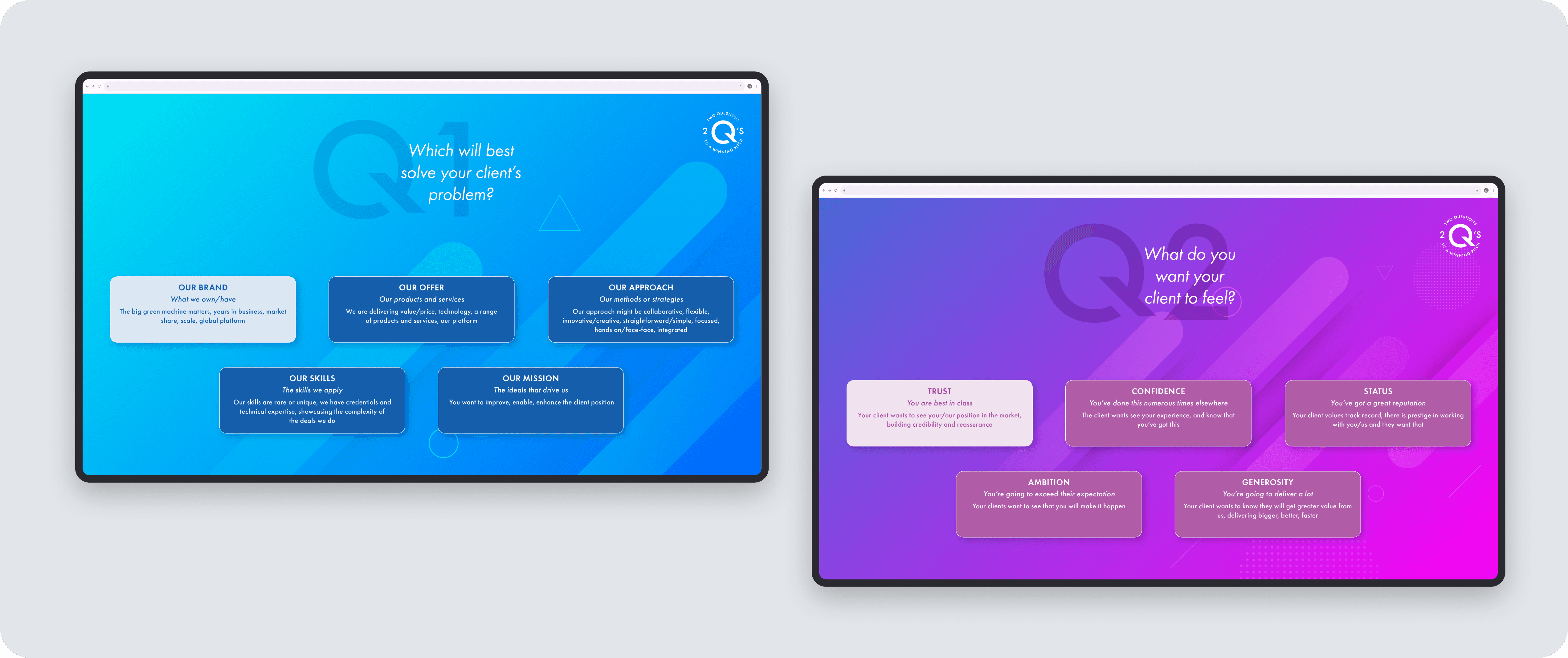
We built an internal web tool called the 2 Questions Tool — a structured, guided workspace that starts every opportunity with two fundamental questions:
What’s the client’s real challenge?
What’s the most strategic way to respond?
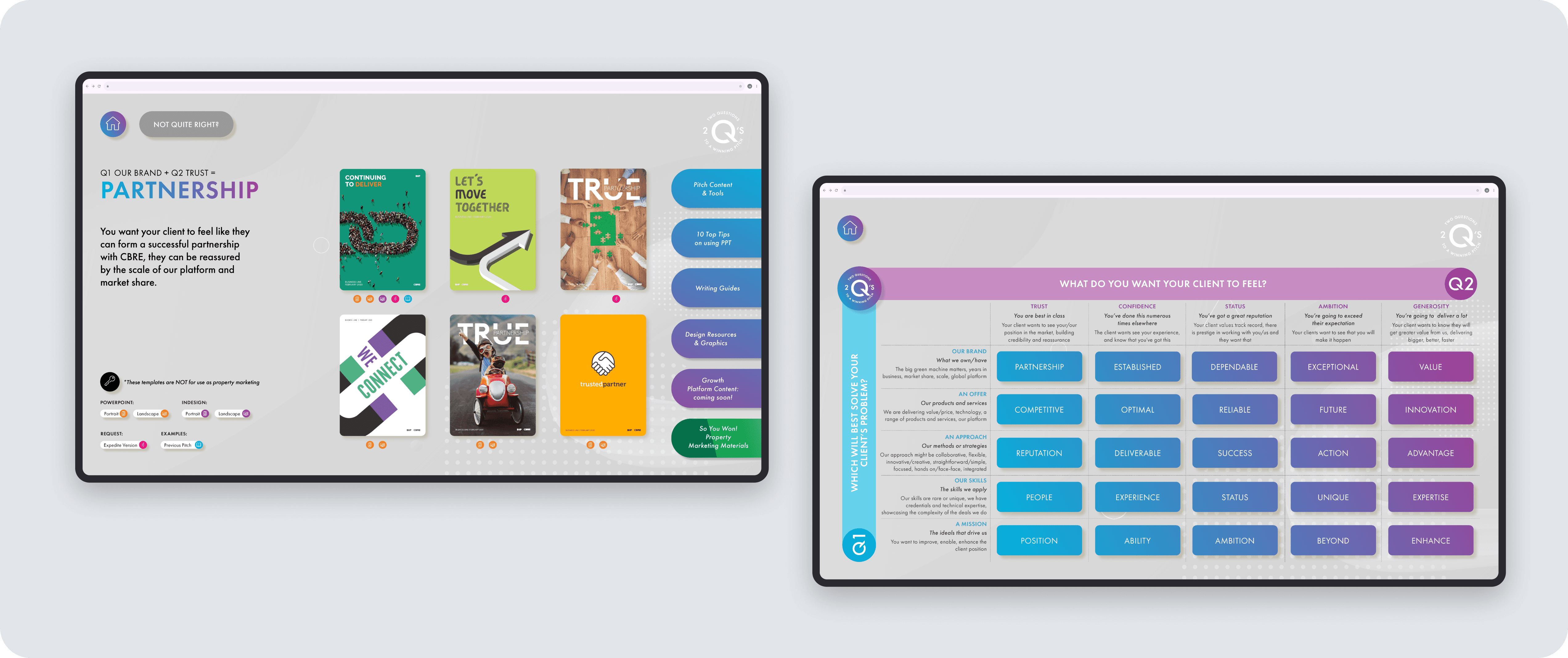
From there, the interface guided users through discovery, insights, and templates, linking back to the tools teams already worked in (PowerPoint, InDesign) to minimise friction. A dynamic combination matrix let teams test different ways of framing the client’s problem before locking in a final mission statement.
The Journey to MVP
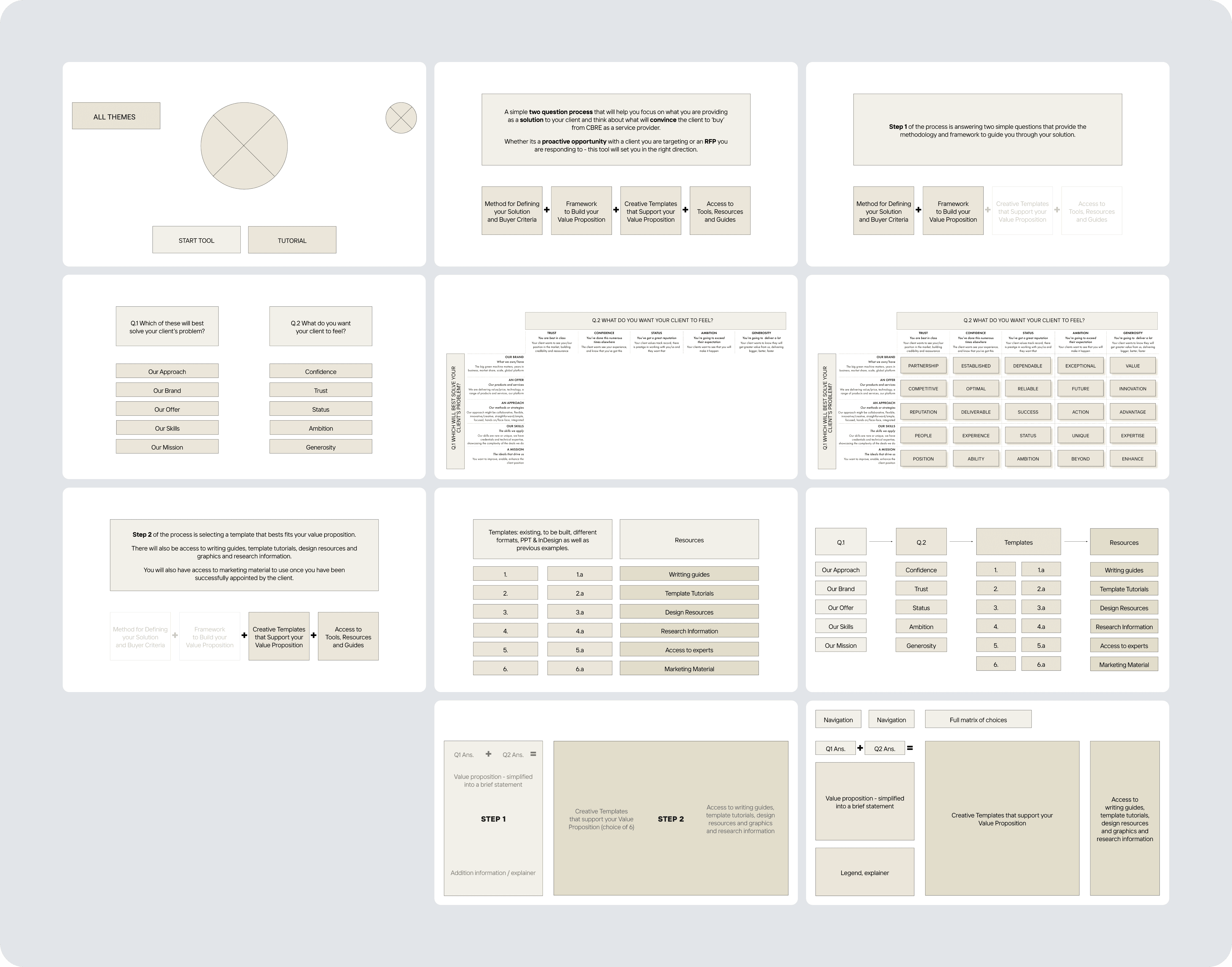
I led the full design lifecycle — from initial framing through MVP to design-system rollout — working shoulder-to-shoulder with product owners, brokers, and business-line leads.
Discovery: mapped existing workflows across marketing, research, and sales to surface bottlenecks and overlaps
Co-design: ran rapid ideation and journey-mapping sessions with brokers to define key pain points and success measures
Design system: built a modular component library to scale the interface across future internal tools
Iteration: validated early prototypes in live sales settings, then refined navigation, copy, and content hierarchy based on observed behaviour
The result was an MVP that didn’t just look polished — it changed how teams qualified opportunities, cutting proposal prep from days to hours and giving 25 business lines a shared language for client problems.
Impact
The tool became embedded in CBRE’s pursuit process globally. Teams finally had a shared method for framing client challenges and aligning responses — replacing the chaos of ad-hoc strategy decks with structured, outcome-driven clarity.
It also sparked a mindset shift: problem framing became a conversation, not a form to fill. Leadership credited the tool with enabling more confident storytelling, faster collaboration, and measurable commercial gains.
+12.5%
Revenue uplift
Revenue has increased by 12.5% or A$48M
76%
Client retention
Implementing the voiceover with users spending more time exploring content and completing more actions per session.
Some client feedback from work produced using the tool:
We were really impressed by the unique tailored solutions to our business requirements. CBRE really showed that they took the time to understand us and how we work and put forward some out-of-the-box ideas.
MVP
Lay the foundation
The 2 Questions dashboard laid the groundwork for the Growth Platforms evolving team. The design system and framework gave their team the tools they needed to continue building features to integrate with the other client solutions and products within the business.
A simple process to kick start any new piece of client work.
Final observations & learnings
My biggest learning from this project was about restraint. The 2 Questions Tool worked because it asked so little — two questions, folded into the daily routine, was a low enough bar that an organisation of 1,800 people across 25+ business lines could actually clear it. The interface mattered far less than the ritual it created. The craft went into what we left out, not what we built in.

Alex Pacheco
Lead Product designer
If you like what you see or have any questions, feel free to send me an email anytime.
Selected work
[2022 -2025]

National Australia Bank
Making money management effortless
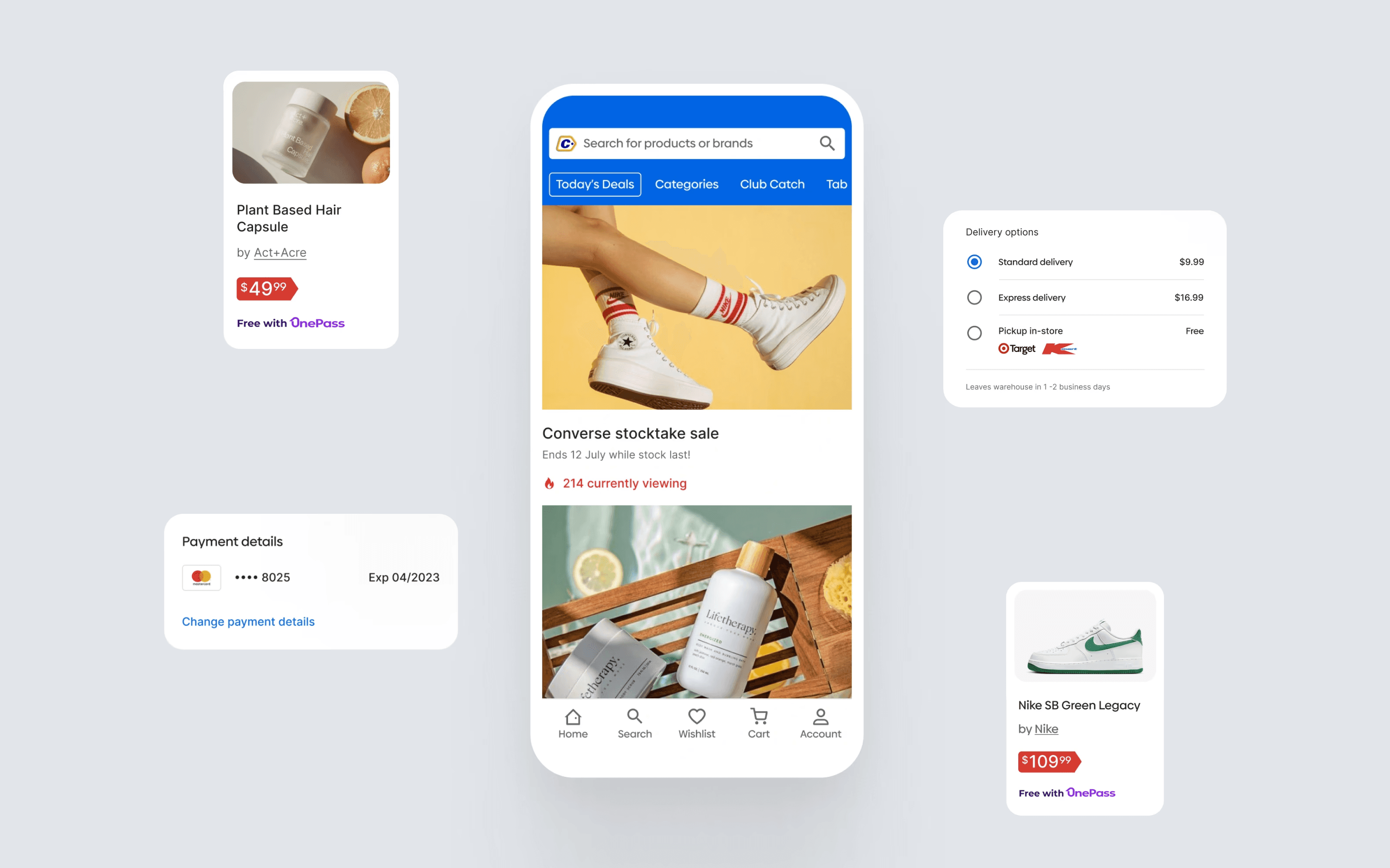
Catch
Helping Australians shop with ease
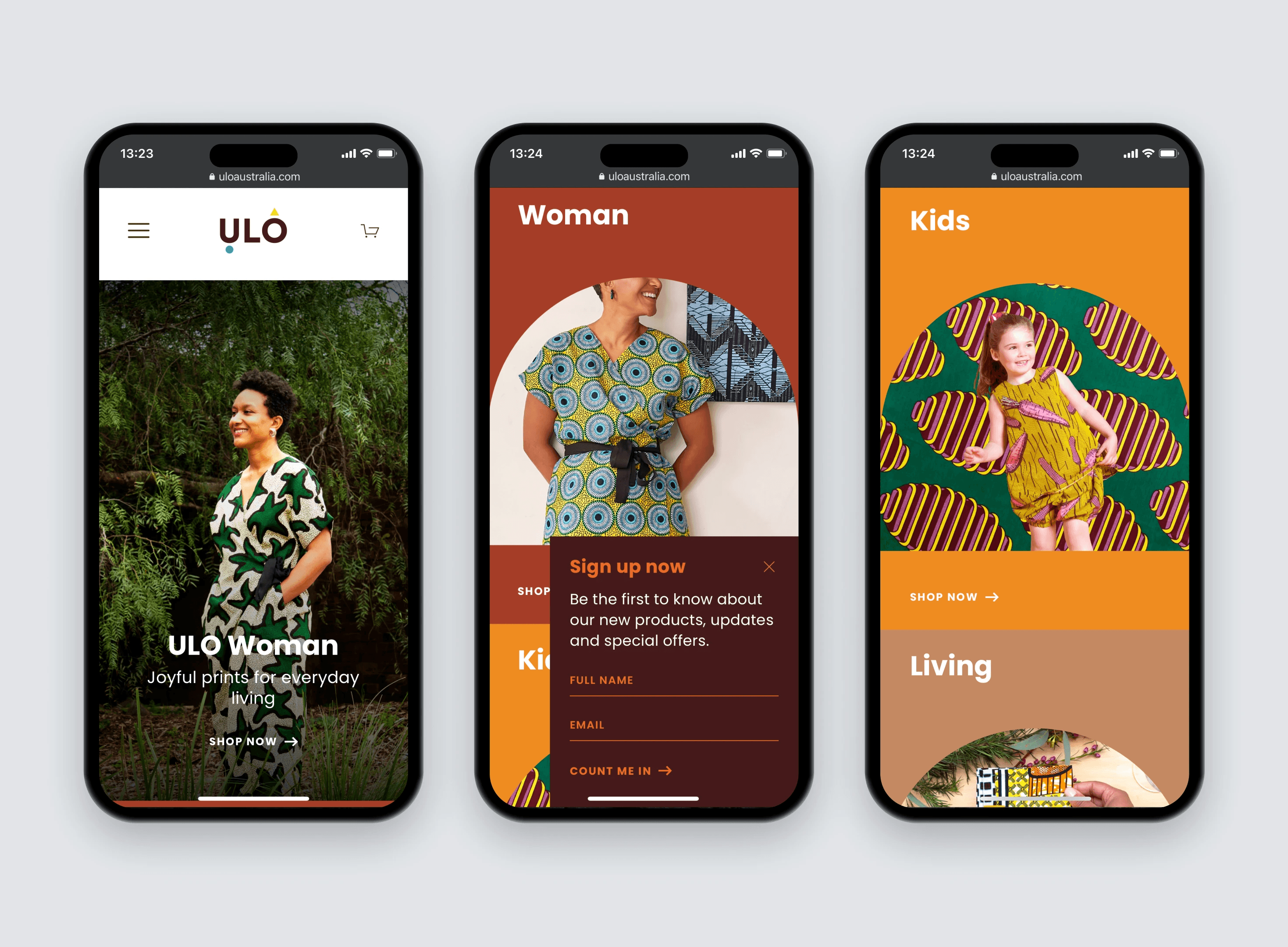
ULO
A playful e-commerce site
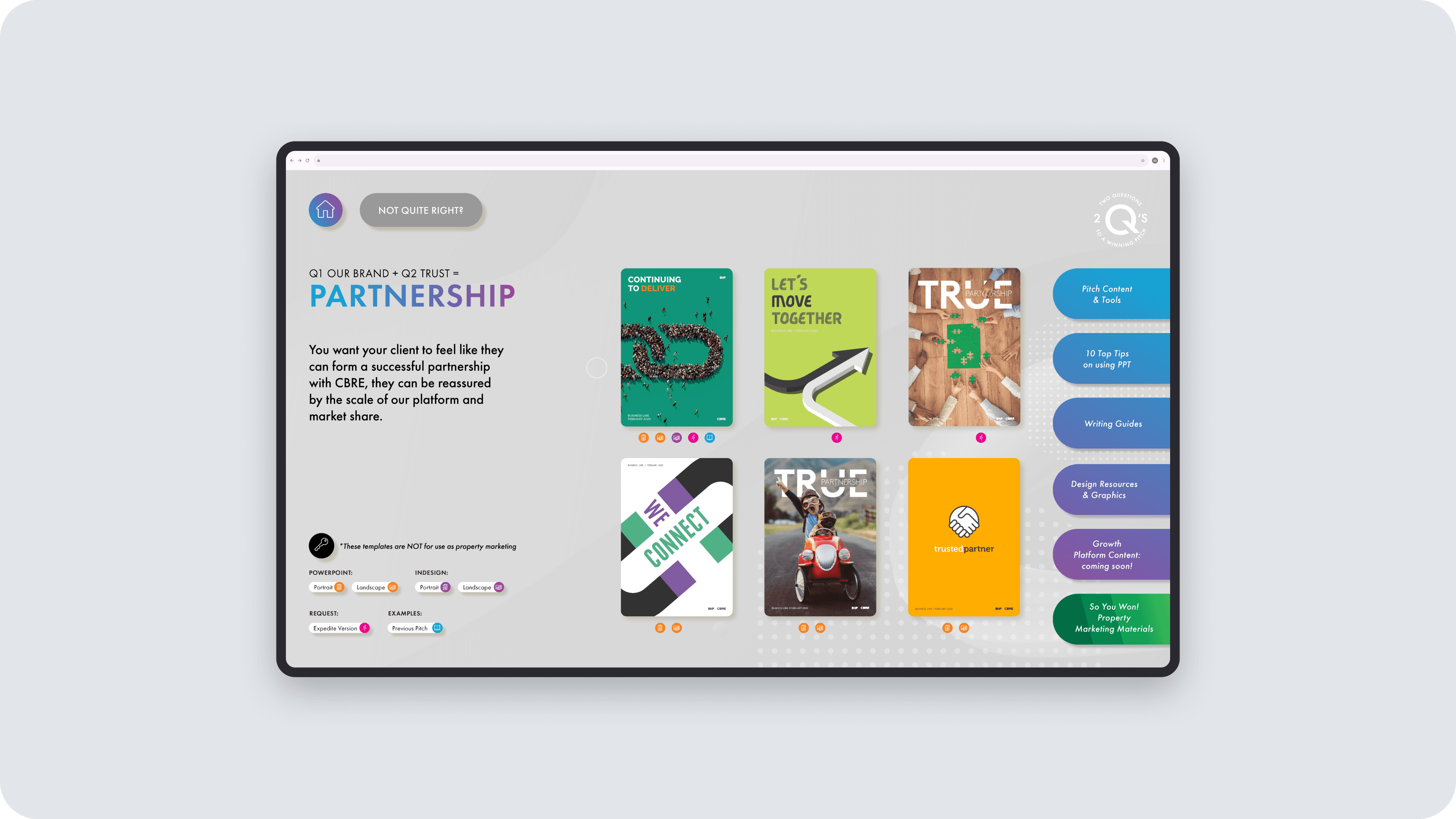
CBRE Growth Platform
Two questions that changed how brokers pitch
